Recognition survives across formats and channels
Capability
Brand Identity.
Distinctive, practical identity systems built to perform across organisations and channels.
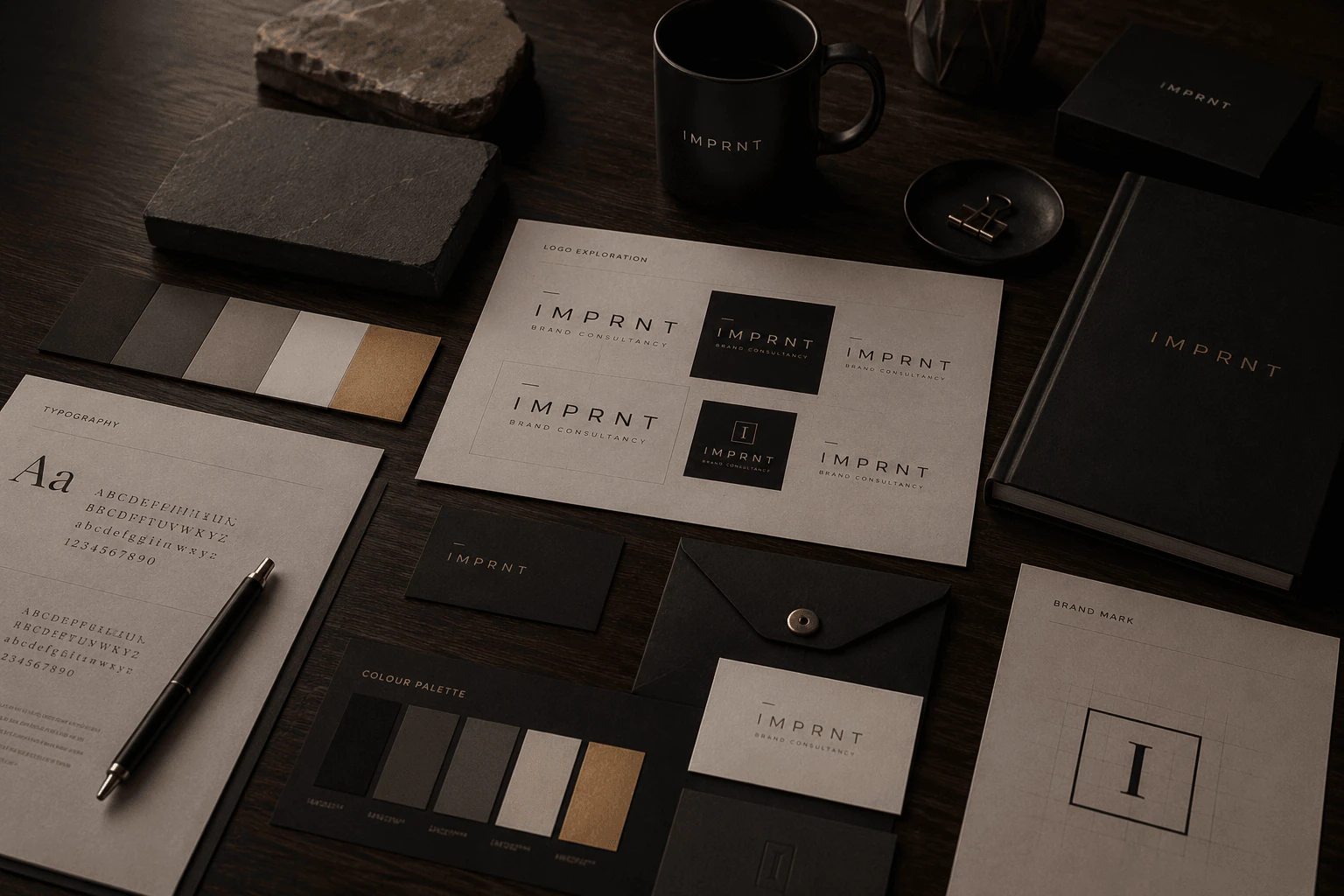
The strategic problem
The identity must be recognisable before the logo is visible.
A logo without an operating system creates inconsistency, slows teams and weakens recognition.
Distinctiveness is not visual novelty. It is the disciplined creation of recognisable memory structures.
Designed for
- Established organisations
- New ventures
- Organisations consolidating multiple brands
A practical diagnostic
Test the system before prescribing the output.
Cover the logo on five priority applications. If they could belong to any competitor—or to five different organisations—the identity is not yet functioning as a system.
Creative rules are specific enough to guide choices
Internal teams can produce consistent work without imitation
Scope
Questions and systems the work can address.
Identity concept
Logo systems
Typography and colour
Image direction
Guidelines
Approach
A disciplined path from question to outcome.
- 01Translate strategy into creative principles
- 02Develop and test distinct routes
- 03Build the chosen system
- 04Prove it across priority applications
Deliverables
Outputs should make a decision or behaviour easier.
Final scope, responsibilities, timing and fees are confirmed in an engagement proposal.
Questions
Useful details before we begin.
Can you evolve an existing identity?
Yes. An evolution can protect recognition while improving clarity and usability.
Are guidelines included?
A fit-for-purpose usage system is defined for every identity engagement.
Can internal teams use the system?
Yes. The system is designed around real workflows, formats and capability.
Prepare the decision
Write a brief that can assess creative work.
Define the desired audience response, mandatory constraints and decision criteria before reviewing visual directions.